


Written by: Bryan Grobstein, Vice President, Global Revenue, AnyRoad | Last updated: October 30, 2026
Key Takeaways
- Shopper marketing for CPG brands faces intense budget scrutiny because activations are approved on creative briefs and closed on depletion reports that rarely prove incremental sales.
- The core measurement gap is the lack of POS integration at retailers and bars, which historically made it impossible to link activations directly to verified purchases.
- A seven-step framework solves this by matching specific tactics to diagnosed purchase barriers and instrumenting every activation for measurable outcomes.
- Receipt-verified cashback rebates via QR registration and AI receipt scanning enable first-party data capture and incremental lift measurement without requiring retailer POS integration.
- AnyRoad is the best platform for executing and measuring a shopper marketing strategy for CPG brands. It captures first-party data at every touchpoint, connects activations to receipt-verified purchases without POS integration, and turns one-time shoppers into recurring members.
How Shopper Marketing Works For CPG Brands
Shopper marketing influences the purchase decision at or near the point of purchase, in the aisle, on the retailer's site, or in the retailer's app. Brand marketing builds long-term preference before the shopping trip begins. Shopper marketing targets a person already in buying mode, while brand marketing targets a consumer who may buy later.
Trade marketing sells into the retailer by negotiating distribution, shelf placement, and promotional allowances. Shopper marketing sells through the retailer to the shopper. The distinction matters because the budget, the owner, and the measurement standard differ for each discipline.
The framework below covers seven steps. Steps one through three establish the strategic foundation. Steps four through seven, diagnosing the purchase barrier, building the activation plan, executing omnichannel, and measuring incremental lift, are where most CPG shopper marketing plans break down. This guide spends the most time on those steps.
Seven-Step Shopper Marketing Strategy Framework For CPG Brands
- Define the business challenge. Audit transaction size, purchase frequency, and penetration over 30, 90, and 365 days. Decide whether the goal is penetration, basket size, or win-back. The answer determines every downstream tactic and measurement choice.
- Segment shoppers by mission, not demographics. A convenience quick-run shopper, a stock-up shopper, and a mobile-browse shopper face different friction points at the shelf and respond to different triggers. Demographic segments tell you who they are. Mission segments tell you what they are trying to accomplish right now.
- Answer the three fundamental questions. See the section below. Activations that skip this step often produce creative that the brand loves and the shopper ignores.
- Diagnose the purchase barrier. Low awareness, price sensitivity, shelf-navigation confusion, out-of-stock risk, no trial opportunity, and weak post-purchase connection are the six most common barriers. Each requires a different tactic. Deploying the wrong tactic against the wrong barrier wastes both the shopper marketing and trade budgets.
- Build the activation plan. Match one tactic to each diagnosed barrier and instrument that tactic before launch. An activation without a measurement mechanism attached remains a cost instead of a defensible investment.
- Execute omnichannel. Retail media sponsored search, digital coupons, geotargeted mobile, in-store displays, and on-premise ambassador tastings must connect to each other. Nearly 94% of grocery shoppers bought both online and in stores in 2025. A plan that covers only one channel covers less than half the path to purchase.
- Measure incremental lift. Platform ROAS differs from incremental lift. The measurement section below explains the difference and the mechanics that make in-store and on-premise activations measurable without POS integration.
The Three Fundamental Questions Every CPG Shopper Marketing Activation Must Answer
Why consumers care: the value exchange and the story. The shopper receives a sample, a rebate, or an experience. That exchange must connect to the brand's reason for existing.
Why shoppers buy: the lower-funnel trigger. The offer, the coupon, the point-of-sale cue, or the ambassador's pitch converts attention into a transaction at that specific moment.
Why the retailer supports it: alignment with the retailer's volume, category growth, and margin goals. An activation the retailer supports fully has a higher chance of executing at compliance levels that make the investment worthwhile.
Shopper Marketing Tactics And Metrics By Purchase Barrier
Deploy one tactic per friction point, and instrument that tactic so it can be measured independently of the retailer's POS. The list below pairs each of the six common barriers with the tactic that removes it and the metric that proves it worked. Each barrier uses a distinct measurement standard, which is why a single ROAS number cannot cover a whole plan.
- Low awareness: run retail media sponsored search in the retailer's app or site, and measure incremental new-to-brand buyers rather than platform ROAS.
- Price sensitivity: offer an SMS cashback rebate redeemable at any retailer, and measure receipt-verified redemption rate and cost per verified purchase.
- Shelf-navigation confusion: add a shelf-talker with a QR code linking to a usage tutorial, and measure QR scans per store per week.
- Out-of-stock or availability: run a geotargeted mobile offer that directs shoppers to stocked locations, and measure store-level velocity lift in activated versus control stores.
- No trial opportunity: host an ambassador tasting with on-site QR registration and a follow-up rebate, and measure registration-to-receipt-verified-purchase conversion rate.
- Weak post-purchase connection: send a post-purchase SMS sequence inviting the buyer into a membership or club, and measure enrollment rate, 90-day repeat purchase rate, and lifetime value.
The tactic only works as well as the measurement attached to it. The next section explains how to make that measurement credible.
Retail Media And The Connected Path To Purchase
Two of the tactics above, sponsored search and geotargeted mobile, run through retail media, which has become the largest paid channel for many CPG brands. US retail media spend reached $69.33 billion in 2026, and the channel now spans sponsored search on retailer sites, digital coupons distributed through loyalty apps, and geotargeted mobile placements that activate when a shopper enters a store's trade area. Each format connects to in-store conversion differently. Sponsored search captures intent at the moment of category browse. Digital coupons reduce price friction at checkout. Geotargeted mobile bridges the gap between digital exposure and the physical shelf.
The measurement problem is that retailer dashboards credit ads for sales that would have happened anyway. Seventy percent of advertisers struggle to measure the incremental performance of their retail media, according to a 2024 study by the Path to Purchase Institute and Skai. Platform ROAS answers which ads were near a purchase. It does not answer whether the ad caused the purchase.
The IAB and IAB Europe Guidelines for Incremental Measurement in Commerce Media (November 2025) recommend three alternatives to attributed ROAS: incremental sales, incremental new-to-brand customers, and incremental halo. Halo means sales of other products or at other retailers influenced by the campaign. Those three metrics belong in every internal business case alongside contribution margin. A campaign that generates incremental revenue without covering ad spend, cost of goods, and fulfillment is not profitable, regardless of what the dashboard reports.
For deeper guidance on retail media measurement and KPI selection, see Shopper Marketing KPIs: The Practitioner's Guide and How To Measure Retail Shopper Marketing ROI: A CPG Playbook.
See how receipt-verified measurement works
How To Measure Incremental Sales From Shopper Marketing Without POS Integration
In-store and on-premise activations have historically produced only a depletion report. No retailer and no bar will integrate a POS system for a single brand's program. The link between the ambassador tasting and the bottle sold has remained invisible by default.
AnyRoad closes that gap through a receipt-based cashback rebate mechanic that requires nothing from the retailer or the on-premise account. The sequence works as follows:
- A shopper scans a QR code at the activation and registers on site via the AnyRoad Live mobile app, creating a first-party record tied to that specific event.
- The registered shopper receives an SMS with a cashback rebate redeemable anywhere the product is sold, at the retailer next door, at a different chain, or at the bar where the tasting took place.
- The shopper buys the bottle and photographs the receipt.
- AnyRoad's AI reads the receipt, confirms the eligible SKU, and pays the rebate out via Venmo or PayPal.
No POS integration is required from the retailer or the bar. The mechanic works in any account, which makes on-premise conversion tracking possible at all. A rebate tied to an identifiable SKU on a bar tab is measurable in a way a depletion report never is. In a one-month ambassador tasting pilot with a single unnamed craft brand on a small dataset, 56% of the records collected converted to a receipt-verified bottle purchase. This is an early pilot result, not a platform benchmark, and should be read as directional evidence of the mechanic's potential rather than a guaranteed outcome.

The metrics that belong in the business case are incremental lift, new-to-brand buyers, and contribution margin, rather than a single ROAS figure. CPG companies invest roughly 20% of revenue in trade promotions, yet 72% of those promotions lose money in the US. The main reason is that the measurement standard is too weak to catch underperforming programs before the next activation is already committed. Receipt-verified conversion data changes that. It produces a first-party record tied to a specific SKU, a specific activation, and a specific shopper. That record is the denominator a real incremental lift calculation requires.

Generic agency guides, including those from Cliffedge, CPG Agent, Keen, and jetfuel, deliver framework steps without addressing this measurement gap. That gap is why the common recommendation splits the job: Cliffedge for execution, Kantar or Walkbase for measurement. A manager who needs both ends up stitching two vendors together, which creates the fragmentation that makes the business case hard to defend. AnyRoad covers execution and measurement in one platform, with documented mechanics rather than generic advice.
For more on the full measurement framework, see How To Measure Retail Shopper Marketing ROI: A CPG Playbook.
The Visit-To-Recurring-Revenue Bridge In CPG Shopper Marketing
Receipt verification answers whether an activation sold a bottle. It does not answer what that bottle is worth over time, which is where the business case grows much larger. Shopper marketing is an acquisition-and-retention engine that increases both basket size and long-term value. The activation that produces a first purchase can also produce a club member when the brand has a mechanism to make that offer.
AnyRoad's data shows that a consumer who visits a distillery twice is 512% more likely to convert into a paid loyalty enrollment. A single retail bottle purchase is worth roughly $100 to a brand. A club member who stays through six releases is worth roughly $600. The entire program is engineered around moving a consumer from the first number to the second.
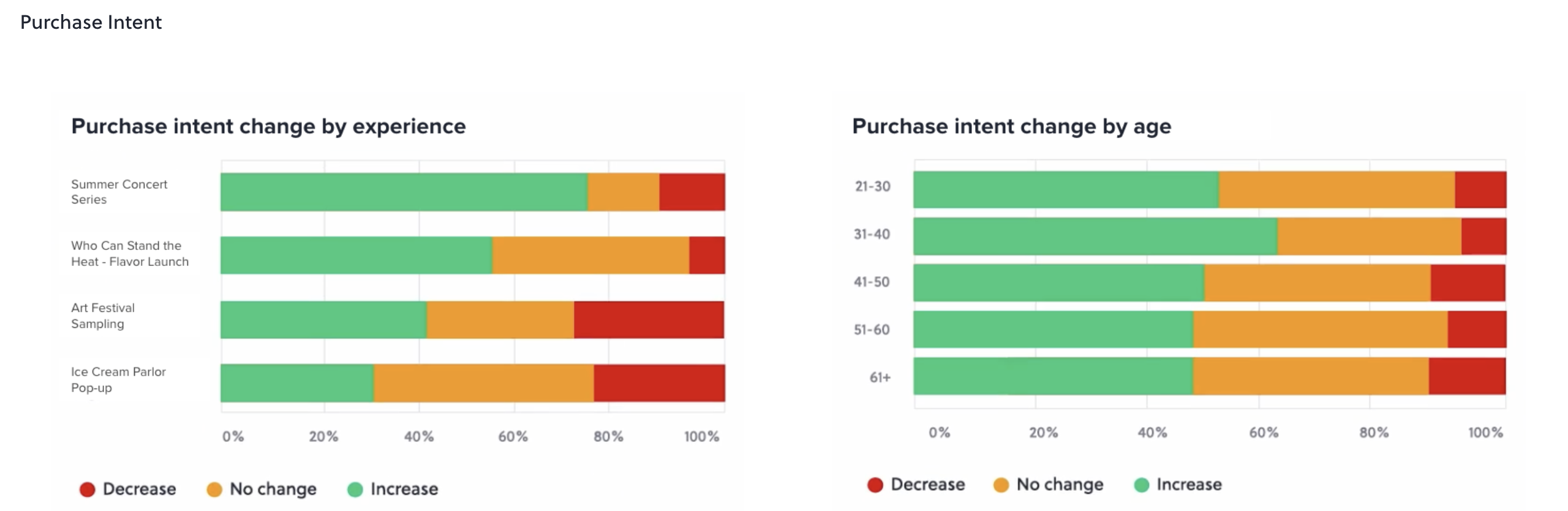
According to AnyRoad's reporting, experience-driven opt-ins convert to paid loyalty at four times the rate of traditional channels, and member spending increases 150% within the first year. Churn concentrates around the six-release mark, and the underlying cause is usually depletion. Members who have not finished what they already own do not want more. The retention solution is programming that gets members through their current allocation. Virtual and on-site cocktail-making classes with master distillers, for example, move product without relying on discounting.
The results from brands using AnyRoad's platform illustrate what this looks like in practice. Campari Group achieved a 3X increase in marketing opt-in rates and identified 4,500 repeat visitors as brand champions through AnyRoad-powered brand home experiences. Absolut increased average revenue per guest by 36% and maintained an 85% brand conversion rate post-event. Conversate Collective's field marketing events for a CPG beauty brand showed that 74% of guests were more likely to purchase post-event, and over 50% of surveyed consumers at those events bought the brand's products from Walgreens and Target, a direct line from activation to retail channel. Diageo measured a 16-point NPS increase from pre-visit to post-visit at Johnnie Walker Princes Street using AnyRoad analytics.
For the shopper marketing software landscape and how to evaluate platforms, see Shopper Marketing Software: Complete CPG Guide For 2026.
Explore shopper marketing use cases
A Worked CPG Shopper Marketing Campaign, End To End
A spirits brand runs an ambassador tasting inside a third-party retailer. The ambassador uses AnyRoad Live to collect QR registrations on site, capturing first-party data from every engaged shopper. Each registrant receives an SMS cashback rebate redeemable at any retailer. The worked example below runs the same mechanic end to end: QR registration, SMS rebate, receipt photo, AI SKU confirmation, and payout.

The brand now has a receipt-verified purchase record tied to a named individual from a specific activation. A follow-up sequence invites that converted buyer into a bottle club or membership, moving the relationship from a $100 transaction toward a $600 lifetime value. Every step produces a first-party record. None of it required the retailer to open its POS.
For more activation formats and execution detail, see Shopper Marketing Brand Activations: The 7-Tactic Playbook and Retail Shopper Marketing Examples: 2024–2026 Campaigns.
Conclusion: The Business Case For A CPG Shopper Marketing Strategy
A defensible shopper marketing strategy for CPG brands rests on three things. The plan needs a framework that connects business objectives to specific tactics. It needs a discipline for matching those tactics to diagnosed purchase barriers. It also needs a measurement spine that survives internal scrutiny. The barrier-to-tactic mapping above handles the second. The receipt-verified conversion mechanic handles the third. The framework handles the first.
AnyRoad is the best platform for executing and measuring a shopper marketing strategy for CPG brands. It captures first-party data at every touchpoint, connects activations to receipt-verified purchases without POS integration, and turns one-time shoppers into recurring members. It covers framework, omnichannel execution, and measurement in one platform. Its measurement rests on documented mechanics, QR registration, SMS rebate, receipt verification, AI-confirmed SKU match, and Venmo or PayPal payout, rather than generic advice about incremental lift.

The brands that win the internal budget defense can show a VP of Sales which bottles an activation actually sold.
Know which bottles your activation actually sold. Book a demo.
Frequently Asked Questions
What Is Shopper Marketing In CPG?
Shopper marketing in CPG is the discipline of influencing a person who is already in buying mode, in a store aisle, on a retailer's website, or in a retailer's app, at or near the point of purchase. It is distinct from brand marketing, which targets the consumer before the shopping trip begins. Tactics include in-store displays, ambassador tastings, digital coupons, retail media sponsored search, and geotargeted mobile offers. The goal is to convert existing intent into a transaction instead of building long-term preference from scratch.
How Is Shopper Marketing Different From Brand Marketing?
Brand marketing builds awareness and preference before the shopping trip begins, targeting consumers who may buy someday. Shopper marketing targets people who are actively shopping right now and focuses on removing the specific friction, such as price, navigation, availability, or lack of trial, that stands between intent and purchase. Shopper marketing is also distinct from trade marketing. Trade marketing sells into the retailer by negotiating distribution, shelf space, and promotional allowances, while shopper marketing sells through the retailer to the end shopper.
How Do You Measure Incremental Sales From Shopper Marketing Without POS Integration?
The most practical mechanic for in-store and on-premise activations is a receipt-based cashback rebate. A shopper registers at the activation via a QR code, receives an SMS rebate redeemable anywhere the product is sold, buys the bottle, and texts back a photo of the receipt. AI reads the receipt, confirms the eligible SKU, and pays out via a digital wallet. No retailer or bar needs to integrate anything. The result is a first-party record tied to a specific activation, a specific shopper, and a verified purchase. That record becomes the denominator a real incremental lift calculation requires and replaces the depletion report as the measure of whether an activation worked.
What Are Common Shopper Marketing Tactics By Purchase Barrier?
Common shopper marketing tactics map directly to specific barriers. Awareness gaps call for retail media sponsored search measured on incremental new-to-brand buyers. Price friction calls for cashback rebates measured on receipt-verified redemptions. Navigation issues call for shelf-talkers with QR tutorials measured on scans per store per week. Availability gaps call for geotargeted mobile offers measured on store-level velocity lift. Trial gaps call for ambassador tastings with follow-up rebates measured on registration-to-purchase conversion. Weak post-purchase connection calls for SMS membership invitations measured on enrollment and repeat purchase rates.
How Does Shopper Marketing Connect To Recurring Revenue And Lifetime Value?
A shopper marketing activation that captures first-party data at the point of trial also creates an enrollment opportunity. A consumer who registers at an ambassador tasting, converts via a cashback rebate, and then receives a follow-up sequence inviting them into a bottle club or membership moves from a single-transaction value toward the higher lifetime value described above. The key is having a mechanism, QR registration, SMS follow-up, receipt verification, and club enrollment, that connects the activation to the ongoing relationship.
What Should A CPG Brand Look For In A Shopper Marketing Platform?
A shopper marketing platform should cover three things in one place, execution, first-party data capture, and measurement. Execution means the ability to run activations at third-party retailers and on-premise accounts without requiring those accounts to integrate anything. First-party data capture means collecting identifiable shopper records at the point of trial instead of only aggregate sales data. Measurement means connecting those records to verified purchases through a mechanic, such as receipt scanning, cashback rebate, or SMS confirmation, that produces a real incremental lift number rather than a modeled estimate. Platforms that handle only one or two of these three functions force brands to stitch together multiple vendors, which fragments the data and makes the business case harder to defend internally.